

The test is not whether a deck or follow-up looks polished. It is whether the buyer can explain the case internally, defend the choice and carry the logic into the next conversation.
What is usually getting in the way
The offer is strong, but the sales story is too weak or inconsistent
Many businesses know their service is valuable, but the deck, brochure, outreach, or sales conversation does not make that value easy to repeat, justify, or carry into internal decision-making.
Sales assets explain features, but do not support the decision
Many decks, brochures, and follow-up materials share information without clarifying what matters, why the approach is different, or how buyers can justify the choice to others involved.
The business relies too heavily on live explanation
If every serious opportunity depends on you personally explaining the value or filling in the gaps, the sales system is not doing enough to support consistency, confidence, and scale.
What most businesses get wrong
Sales support often becomes a set of separate assets: a deck, brochure, outreach sequence, profile update, or sales input. Each may help, but the message can still shift across the decision journey.
What needs to happen instead
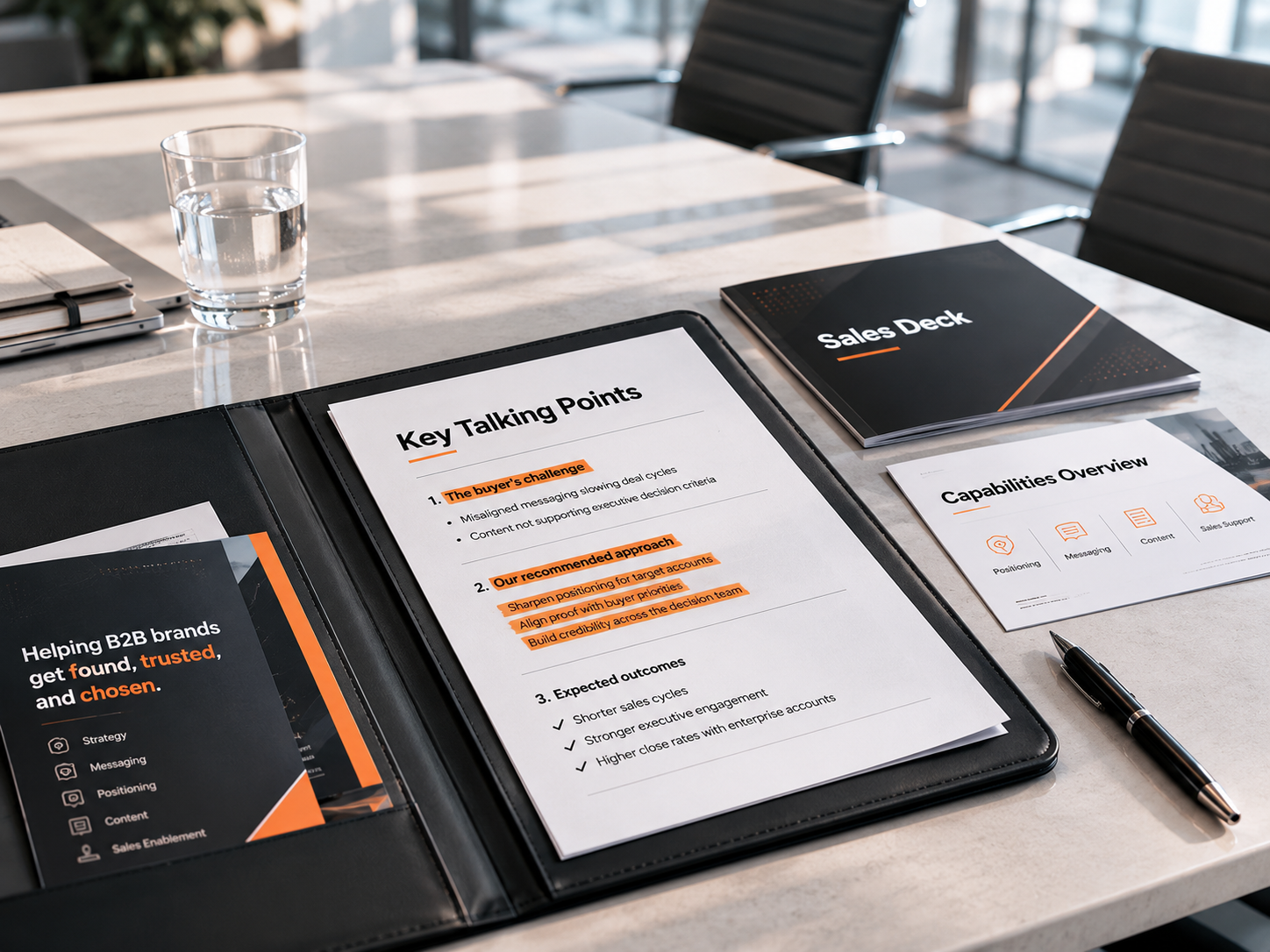
Sales enablement should work as a decision system, where assets, conversations, follow-ups, and closing support reinforce the same logic. Buyers should find it easier to understand, compare, trust, and justify the offer.
How the support works
1. We review where the sales story is breaking down
We look at the assets, sales calls, meetings, and touchpoints where the offer loses force. Success looks like knowing where trust drops, the message drifts, or buyers need too much explanation.
2. We shape the core sales argument
We clarify the reasoning, proof, objections, and commercial logic that different stakeholders need to justify the decision. Success looks like a sharper business case, not just cleaner wording.
3. We build or refine the assets that support the deal
This can include decks, brochures, LinkedIn bios, outreach, follow-up emails, comparison guides, pitch messaging, and sales materials. Where needed, it can also include B2B sales support or closing guidance.
4. We make the sales layer feel more joined up
The aim is not isolated assets. It is to make the wider sales environment easier for you, your team, your champion, and your buyer to use with more clarity and confidence.
Built around your goals, not forced into a fixed package
Sales Support & Enablement can stand alone when the main issue is inconsistent sales meetings or deals slowing down late in the process. We build the right support around the specific point where confidence is being lost or momentum is stalling.
Pair this with Website & Funnels when the business needs stronger alignment between the pages buyers read, the assets they receive, and the sales conversations that follow.
Testimonials
In their words
FAQs
1. Is this just sales copywriting?
No. Writing is part of it, but the wider job is to strengthen the full decision layer around the sale. That means making sure the assets, the message, and the sales call all support the same case and help the buyer move forward with more confidence.
2. What kinds of assets can this include?
That depends on what the business needs. It can include sales decks and brochures, personalised outreach messages, social media profiles and bios, follow-up messaging, pitch materials, comparison guides, and other sales-facing assets that help buyers understand and justify the offer.
3. Do you offer actual sales closing support too?
Yes. Where it makes sense, this can include hands-on B2B sales support and enterprise deal closing help, especially when the offer is strong but the business needs experienced support in moving the conversation through the final stages.
4. Can this work alongside our internal sales team?
Yes. In many cases, that is exactly where it works best. The aim is not to override what your team is doing. It is to strengthen the materials, sharpen the message, and help the wider sales process feel more consistent and more convincing.
5. How is this priced?
As a fixed project or scoped support arrangement, depending on whether the focus is on asset creation, sales consulting, live deal support, or a wider enablement layer. The final scope depends on where the commercial leak is and how much of the sales environment needs attention.